<?xml version="1.0" encoding="utf-8"?>
<feed xmlns="http://www.w3.org/2005/Atom">
  <title>internet</title>
  <link rel="alternate" type="text/html" href="http://www.aliak.com/category/category/internet"/>
  <link rel="self" type="application/atom+xml" href="http://www.aliak.com/taxonomy/term/324/atom/feed"/>
  <id>http://www.aliak.com/taxonomy/term/324/atom/feed</id>
  <updated>2008-01-31T10:08:31+00:00</updated>
  <entry>
    <title>YOU OWN ME NOW UNTIL YOU FORGET ABOUT ME exhibition</title>
    <link rel="alternate" type="text/html" href="http://www.aliak.com/content/you-own-me-now-until-you-forget-about-me-exhibition" />
    <id>http://www.aliak.com/content/you-own-me-now-until-you-forget-about-me-exhibition</id>
    <published>2008-05-13T20:32:24+01:00</published>
    <updated>2008-05-13T20:35:32+01:00</updated>
    <author>
      <name>AliaK</name>
    </author>
    <category term="arts" />
    <category term="europe" />
    <category term="exhibition" />
    <category term="internet" />
    <category term="internet" />
    <summary type="html"><![CDATA[<p><img src="http://www.youownmenow.net/pics/namshubweb_s.gif" hspace="20" align="left" /> Speech and the faculty of meta-reflection about one's language are inherent characteristics of human beings. All projects shown in the exhibition YOU OWN ME NOW UNTIL YOU FORGET ABOUT ME. are originally Internet-based artworks. The main common ground is their starting point in the exploration of our language with its arbitrary systems and rules, its corresponding functions within society, as well as with its absurdities and restrictions for the individual. Rather than to focus on the isolated - literary/literally - artwork, the exhibition highlights general artistic tendencies leading to a discursive process, which originates from the Internet and finds its way back to the "virtualities of our real life".<br />
Besides general information and documentation about YOU OWN ME NOW UNTIL YOU FORGET ABOUT ME. the website of the exhibition includes the possibility to extend the concept as well as the list of selected works of art. Just go to <a href="http://www.youownmenow.net" title="http://www.youownmenow.net" rel="nofollow">http://www.youownmenow.net</a>, enter a link of your own choice plus short link-description and submit your preferred work of art. Thank you for your participation!</p>
    ]]></summary>
    <content type="html"><![CDATA[<p><img src="http://www.youownmenow.net/pics/namshubweb_s.gif" hspace="20" align="left" /> Speech and the faculty of meta-reflection about one's language are inherent characteristics of human beings. All projects shown in the exhibition YOU OWN ME NOW UNTIL YOU FORGET ABOUT ME. are originally Internet-based artworks. The main common ground is their starting point in the exploration of our language with its arbitrary systems and rules, its corresponding functions within society, as well as with its absurdities and restrictions for the individual. Rather than to focus on the isolated - literary/literally - artwork, the exhibition highlights general artistic tendencies leading to a discursive process, which originates from the Internet and finds its way back to the "virtualities of our real life".</p>
<p>Besides general information and documentation about YOU OWN ME NOW UNTIL YOU FORGET ABOUT ME. the website of the exhibition includes the possibility to extend the concept as well as the list of selected works of art. Just go to <a href="http://www.youownmenow.net" title="http://www.youownmenow.net">http://www.youownmenow.net</a>, enter a link of your own choice plus short link-description and submit your preferred work of art. Thank you for your participation!</p>
<p>PHYSICAL EXHIBITION AND CALL FOR ONLINE PARTICIPATION<br />
CONT3XT.NET.NEWS #04.08</p>
<p>----- ----- -----</p>
<p>YOU OWN ME NOW UNTIL YOU FORGET ABOUT ME</p>
<p>----- ----- -----</p>
<p>OPENING RECEPTION: 15 May 2008, 8 pm<br />
EXHIBITION DURATION: 16 May - 22 June 2008<br />
HOSTING INSTITUTION: Mala galerija - Moderna galerija / Museum of Modern<br />
Art, Ljubljana<br />
LOCATION: Slovenska cesta 35, 1000 Ljubljana, Slovenija<br />
WEBSITE: <a href="http://www.youownmenow.net" title="http://www.youownmenow.net">http://www.youownmenow.net</a><br />
CURATORS: Birgit Rinagl, Franz Thalmair / CONT3XT.NET</p>
<p>WITH WORKS BY:</p>
<p>Mary-Anne Breeze (mez)<br />
Codemanipulator(R)<br />
Christina Goestl, clitoressa.net<br />
Karl Heinz Jeron, Valie Djordjevic<br />
carlos katastrofsky<br />
Joerg Piringer<br />
Marek Walczak, Martin Wattenberg</p>
<p>----- ----- -----</p>
<p>ONLINE PARTICIPATION:</p>
<p>Besides general information and documentation about YOU OWN ME NOW UNTIL YOU<br />
FORGET ABOUT ME. the website of the exhibition includes the possibility to<br />
extend the concept as well as the list of selected works of art. Just go to<br />
<a href="http://www.youownmenow.net" title="http://www.youownmenow.net">http://www.youownmenow.net</a>, enter a link of your own choice plus short<br />
link-description and submit your preferred work of art. Thank you for your<br />
participation!</p>
<p>----- ----- -----</p>
<p>EXHIBITION CONCEPT:</p>
<p>Speech and the faculty of meta-reflection about one's language are inherent<br />
characteristics of human beings. All projects shown in the exhibition YOU<br />
OWN ME NOW UNTIL YOU FORGET ABOUT ME. are originally Internet-based<br />
artworks. The main common ground is their starting point in the exploration<br />
of our language with its arbitrary systems and rules, its corresponding<br />
functions within society, as well as with its absurdities and restrictions<br />
for the individual. Rather than to focus on the isolated -<br />
literary/literally - artwork, the exhibition highlights general artistic<br />
tendencies leading to a discursive process, which originates from the<br />
Internet and finds its way back to the "virtualities of our real life".</p>
<p>According to Ferdinand de Saussure's theses, human language can be divided<br />
into three fundamental aspects: the biological preconditions for speaking<br />
(langage), the fixed system of rules and signs (langue) and the act of<br />
speaking itself (parole). The supposition that the language system - thought<br />
as a collective institution of norms - and the speech act - thought as an<br />
individual, coherent and meaningful utterance - are linked reciprocally and<br />
that there is no backflow into the system without speaking, it becomes clear<br />
that human language withdraws itself from an immediate observation. Language<br />
can only be examined in the course of the reconstruction of the process of<br />
its appearance, that is, its articulation. Considering this point of view of<br />
our communication system, the question arises if, accordingly, language is<br />
an exclusively virtual product, the existence of which begins and ends with<br />
its realisation.</p>
<p>In parallel, digital artworks are predetermined by the binary (linguistic)<br />
code, but do not become "real" (commonly comprehensible) until the code is<br />
transformed into text, image, and/or sound (by opening the data file and<br />
executing the commands). Both language and digital artworks are based on<br />
processes, transformations, and a continuous fluidity. The creation of<br />
digital artworks is built upon the active participation of the user just<br />
like the existence of language is built upon a speaking person. Hence, word<br />
and image are no longer integer parts of the artwork, or langue and langage<br />
(as thought by Saussure) are no longer part of parole. The individual<br />
elements of both are entangled in a performative act making interpretation<br />
obsolete. The open work manifests itself by intermediation and is created<br />
individually through every new reception. But what happens if the user<br />
closes the data file, or if the speaking person stops talking?</p>
<p>"In the end there is nothing of an object here, just a process, a set of<br />
rules that leads you to the point of questioning unicity, ownership, and the<br />
object-like nature of digital art works and what you can own is nothing more<br />
than the memory of it."</p>
    ]]></content>
  </entry>
  <entry>
    <title>digital nomads</title>
    <link rel="alternate" type="text/html" href="http://www.aliak.com/content/digital-nomads" />
    <id>http://www.aliak.com/content/digital-nomads</id>
    <published>2008-04-12T20:02:44+01:00</published>
    <updated>2008-04-12T23:11:30+01:00</updated>
    <author>
      <name>AliaK</name>
    </author>
    <category term="internet" />
    <category term="internet" />
    <summary type="html"><![CDATA[<p>The Economist has a <a href="http://www.economist.com/surveys/displaystory.cfm?story_id=10950416" rel="nofollow" rel="nofollow">report on digital nomads</a>. since it looks like I'll be heading back to Australia, I'll no longer be one of these :) perhaps whilst on short trips. it's been great for the past 4 years though, but I've been missing home and friends so it'll be good to have a base again. it's amazing how long you can live without a fixed address though. moving from country to country - hotels and short term rental apartments. most of my life is now on the internet - might sound strange, but it's a good place to backup your files, as well as posting dvd backups back home. I read the <a href="http://www.economist.com/specialreports/displaystory.cfm?story_id=10950394" rel="nofollow" rel="nofollow">first article</a> about <a href="http://www.nomadcafe.net" rel="nofollow" rel="nofollow">Nomad Cafe</a> and this rings true. in many places I've been to cafes and there've been people logged in to their laptops.</p>
    ]]></summary>
    <content type="html"><![CDATA[<p>The Economist has a <a href="http://www.economist.com/surveys/displaystory.cfm?story_id=10950416" rel="nofollow">report on digital nomads</a>. since it looks like I'll be heading back to Australia, I'll no longer be one of these :) perhaps whilst on short trips. it's been great for the past 4 years though, but I've been missing home and friends so it'll be good to have a base again. it's amazing how long you can live without a fixed address though. moving from country to country - hotels and short term rental apartments. most of my life is now on the internet - might sound strange, but it's a good place to backup your files, as well as posting dvd backups back home. I read the <a href="http://www.economist.com/specialreports/displaystory.cfm?story_id=10950394" rel="nofollow">first article</a> about <a href="http://www.nomadcafe.net" rel="nofollow">Nomad Cafe</a> and this rings true. in many places I've been to cafes and there've been people logged in to their laptops. in Jerusalem cafes you often hear Americans talking on skype to their family (I assume) back home. sometimes there's two people at the table facing each other, each having a conversation with someone online.</p>
<p><a href="http://www.economist.com/specialreports/displaystory.cfm?story_id=10950378" rel="nofollow">Labour movement</a>Labour movement mentions examples of virtual office companies where the employees are all mobile / working from home or cafes.</p>
<p><a href="http://www.economist.com/specialreports/displaystory.cfm?story_id=10950449" rel="nofollow">Family ties article</a> talks about networked technology bringing people together - families and friends staying in contact more often. children keeping in contact with their parents for longer. </p>
<p><em><br />
James Katz at Rutgers calls the mobile phone a new sort of umbilical cord between children and their parents and wonders whether this might in some cases “retard maturation”. Sherry Turkle, the psychologist at MIT, says that wireless gadgets are, ironically, a “tethering technology” and create new dependencies that delay the important “Huck Finn moment” in young lives when adolescents first realise that they are alone on the urban equivalent of the Mississippi. Getting drunk and lost after a party is different when one push of a button summons the parental chauffeur. In 2005 a psychology professor at Middlebury College in Vermont found that undergraduates were communicating with their parents, on average, more than ten times a week.</em></p>
<p>in Japan, studies have shown :</p>
<p><em><br />
Mobile technology also tethers couples, especially young ones, but in a different way. Mimi Ito, an anthropologist who studies the effects of mobile technology on youth culture in Japan and America, has found that Japanese lovers send constant text messages to avoid parental rules and to stay connected emotionally when they are physically separated. Every nomadic culture has its idiosyncrasies, and the Japanese speciality is a rich vocabulary of “emoticons”: “I really want to see you (&gt;_&lt;)”; “I feel like I am going to be sick (;_;)”.</em></p>
<p>This steady stream of emoticons and photos in between physical “flesh meets” amounts to “tele-nesting”, says Ms Ito. It also spices up and prolongs the flesh meets. Young people in Tokyo, she has observed, will start their date by exchanging text messages all afternoon as they do homework or take the train to the rendezvous. At night, on their journey home after the actual date, they use messages again as “fading embers of conversation”, sometimes continuing for days and turning little memories into the couple's “lore”.</p>
<p>and even a personal mobile videoblogging &amp; photoblogging / flickring tie in :</p>
<p><em>Often entire cliques do this sort of thing, creating, in effect, their own tribal medium and narrative. Ms Ito has noticed a new genre of photography on the rise as young people use their phones to snap photos of everyday situations—the view from the escalator on the way to school, say—which mean a lot to their friends and nothing to anybody else. They especially love photos that capture “dumb things that their friends do”, such as getting drunk and falling into puddles, which collectively amount to “everyday, casual documentaries” for a circle of friends.</em></p>
<p>another section talks about technology being not good for strangers :</p>
<p><em>Mr Ling, whose job includes loitering in public places for observation, watched a woman at an Oslo underground station who texted as she walked. She was wholly focused on her text message but had to look up occasionally to weave through the crowds on the platform. Other people were doing the same. It was an "atomised and individualised" scene, says Mr Ling: a new form of the proverbial lonely crowd.</em></p>
<p><em>But at least this particular Norwegian woman was signalling through her body language to all around her that she wanted to be left alone. The spread of "hands-free" Bluetooth devices, with hidden earplugs seemingly attached to nothing, is removing even those clues. Steve Love, a psychologist, was travelling on a train from Edinburgh to Glasgow once when a girl standing next to him started talking to him. She asked him how he was and how his day had been, and Mr Love, though a bit shy, politely told her how much he was looking forward to watching Scotland play football that evening. As he spoke, the girl looked at him in horror, then turned away. Only then did Mr Love hear her say "OK, I'll call you later." Not a word or gesture was exchanged for the remainder of the (suddenly uncomfortable) journey.</em></p>
<p>and the awkwardness of waiting for someone else you're with to finish a call : </p>
<p><em>Probably the single most common etiquette conflict occurs, as Mr Ling puts it, when mediated communication interrupts co-present communication, as when two or more people are sitting at a table in conversation or negotiation and one of them gets, and answers, a call. The other co-present people must now keep themselves busy while seeming nonchalant. What is more, they must pretend not to be eavesdropping even though they are only a few feet away from the mediated conversation, ideally by assuming a pose of concentration on some other object, such as their fingernails or their own phone. As soon as the intervening call ends, everybody must try to re-enter the co-present context as gracefully as possible.</em></p>
    ]]></content>
  </entry>
  <entry>
    <title>FLOSS manuals works towards Richard M Stallman&#039;s Free Documentation ideas</title>
    <link rel="alternate" type="text/html" href="http://www.aliak.com/content/floss-manuals-works-towards-richard-m-stallmans-free-documentation-ideas" />
    <id>http://www.aliak.com/content/floss-manuals-works-towards-richard-m-stallmans-free-documentation-ideas</id>
    <published>2007-10-20T01:04:45+01:00</published>
    <updated>2007-10-20T01:22:02+01:00</updated>
    <author>
      <name>AliaK</name>
    </author>
    <category term="documentation" />
    <category term="internet" />
    <category term="internet" />
    <category term="software" />
    <summary type="html"><![CDATA[<p><a href="http://en.wikipedia.org/wiki/Richard_Stallman" rel="nofollow" rel="nofollow">Richard Stallman</a>, founder of the GNU project and the term 'copyleft' wrote about Free Documentation in his book "<a href="http://www.scribd.com/doc/208539/Richard-Stallman-Essays" rel="nofollow" rel="nofollow">Free Software, Free Society : Selected Essays of Richard Stallman</a>".<br />
<i>"The biggest deficiency in our free operating systems is not in the software—it is  the lack of good free manuals that we can include in our systems. Documentation is  an essential part of any software package; when an important free software package  does not come with a good free manual, that is a major gap. We have many such gaps today. "</i><br />
"Free documentation, like free software, is a matter of freedom, not price. The  criterion for a free manual is pretty much the same as for free software: it is a  matter of giving all users certain freedoms. Redistribution (including commercial  sale) must be permitted, on-line and on paper, so that the manual can accompany  every copy of the program. "</p>
<p><a href="http://en.flossmanuals.net/" rel="nofollow" rel="nofollow">FLOSS Manuals</a> is a site dedicated to providing free and open source, FLOSS manuals on a variety of technical topics such as audio editing, VOIP, video editing, streaming, free culture, audio editing, media players, and more. visit their site to read the manuals : <a href="http://en.flossmanuals.net/" title="http://en.flossmanuals.net/" rel="nofollow">http://en.flossmanuals.net/</a></p>
    ]]></summary>
    <content type="html"><![CDATA[<p><a href="http://en.wikipedia.org/wiki/Richard_Stallman" rel="nofollow">Richard Stallman</a>, founder of the GNU project and the term 'copyleft' wrote about Free Documentation in his book "<a href="http://www.scribd.com/doc/208539/Richard-Stallman-Essays" rel="nofollow">Free Software, Free Society : Selected Essays of Richard Stallman</a>". </p>
<p><i>"The biggest deficiency in our free operating systems is not in the software—it is  the lack of good free manuals that we can include in our systems. Documentation is  an essential part of any software package; when an important free software package  does not come with a good free manual, that is a major gap. We have many such gaps today. "</i></p>
<p>"Free documentation, like free software, is a matter of freedom, not price. The  criterion for a free manual is pretty much the same as for free software: it is a  matter of giving all users certain freedoms. Redistribution (including commercial  sale) must be permitted, on-line and on paper, so that the manual can accompany  every copy of the program. "<br />
</p>
<p><a href="http://en.flossmanuals.net/" rel="nofollow">FLOSS Manuals</a> is a site dedicated to providing free and open source, FLOSS manuals on a variety of technical topics such as audio editing, VOIP, video editing, streaming, free culture, audio editing, media players, and more. visit their site to read the manuals : <a href="http://en.flossmanuals.net/" title="http://en.flossmanuals.net/">http://en.flossmanuals.net/</a></p>
    ]]></content>
  </entry>
  <entry>
    <title>STIRR - internet start up event</title>
    <link rel="alternate" type="text/html" href="http://www.aliak.com/node/2862" />
    <id>http://www.aliak.com/node/2862</id>
    <published>2007-08-03T22:39:07+01:00</published>
    <updated>2007-08-03T22:39:07+01:00</updated>
    <author>
      <name>AliaK</name>
    </author>
    <category term="business" />
    <category term="entrepreneur" />
    <category term="ideas" />
    <category term="internet" />
    <category term="internet start ups" />
    <category term="sydney" />
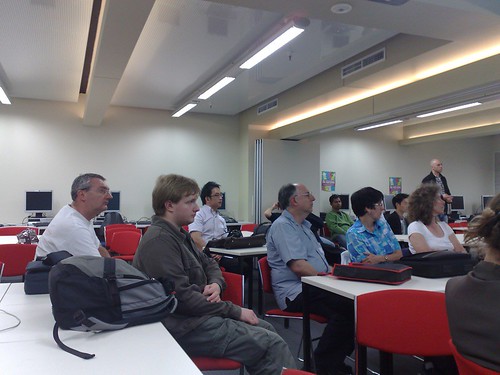
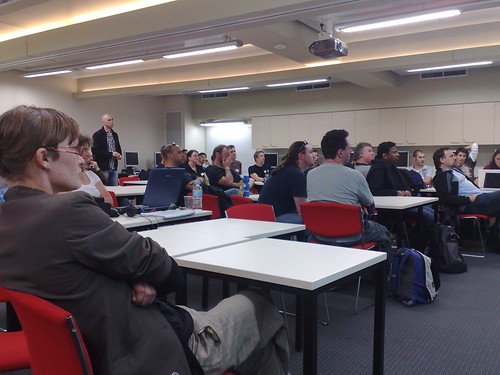
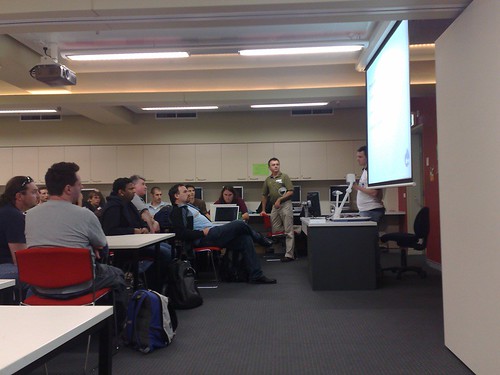
    <summary type="html"><![CDATA[<p>STIRR is a casual networking event for people who work in internet start ups. Start Ups can present their projects.</p>
    ]]></summary>
    <content type="html"><![CDATA[<p>STIRR is a casual networking event for people who work in internet start ups. Start Ups can present their projects.</p>
    ]]></content>
  </entry>
  <entry>
    <title>The second edition of the Streaming Festival ended on the 28th of October 2007.</title>
    <link rel="alternate" type="text/html" href="http://www.aliak.com/content/the-second-edition-streaming-festival-ended-28th-october-2007" />
    <id>http://www.aliak.com/content/the-second-edition-streaming-festival-ended-28th-october-2007</id>
    <published>2006-11-27T00:14:00+00:00</published>
    <updated>2008-03-06T21:33:43+00:00</updated>
    <author>
      <name>isfth</name>
    </author>
    <category term="art" />
    <category term="artist profile" />
    <category term="artists" />
    <category term="arts" />
    <category term="digital tv" />
    <category term="documentary" />
    <category term="event" />
    <category term="exhibition" />
    <category term="experimental" />
    <category term="festival" />
    <category term="festival" />
    <category term="film" />
    <category term="international" />
    <category term="internet" />
    <category term="internet" />
    <category term="machinima" />
    <category term="media art" />
    <category term="net art" />
    <category term="online video" />
    <category term="other film festival" />
    <category term="streaming" />
    <category term="video" />
    <category term="video art" />
    <category term="visual arts" />
    <summary type="html"><![CDATA[<p>The second edition of the Streaming Festival ended on the 28th of October 2007.<br />
The festival broadcasted four programs; documentary, fiction, animation and art plus three special programs.<br />
Composed by the KAN festival was a special program presenting a select number of films including films from Agnieszka Smoczynska, Anna Maszczynska and Anna Pankiewicz.<br />
CultureTV brought a special program with selected international video art works. Including works from Pipilotti Rist, Grimanesa Amoros, Gaelle Denis and Bathtime in Clerkenwell by Alex Budovsky.<br />
Visit : <a href="http://www.culturetv.tv" title="www.culturetv.tv" rel="nofollow">www.culturetv.tv</a><br />
Isfth broadcasted in a special program films from James Harvey, The City of Photographers by Sebastian Moreno and four recent works from Dré Didderiëns www dredidderiens nl. This program was curated by Mak Kapetanovic.<br />
We screened 18 hours of independent films from more than 100 filmmakers from over 20 different countries. The Festival was proud to present these films and their makers to you.</p>
    ]]></summary>
    <content type="html"><![CDATA[<p>The second edition of the Streaming Festival ended on the 28th of October 2007.</p>
<p>The festival broadcasted four programs; documentary, fiction, animation and art plus three special programs.<br />
Composed by the KAN festival was a special program presenting a select number of films including films from Agnieszka Smoczynska, Anna Maszczynska and Anna Pankiewicz.</p>
<p>CultureTV brought a special program with selected international video art works. Including works from Pipilotti Rist, Grimanesa Amoros, Gaelle Denis and Bathtime in Clerkenwell by Alex Budovsky.<br />
Visit : <a href="http://www.culturetv.tv" title="www.culturetv.tv">www.culturetv.tv</a></p>
<p>Isfth broadcasted in a special program films from James Harvey, The City of Photographers by Sebastian Moreno and four recent works from Dré Didderiëns www dredidderiens nl. This program was curated by Mak Kapetanovic.</p>
<p>We screened 18 hours of independent films from more than 100 filmmakers from over 20 different countries. The Festival was proud to present these films and their makers to you.</p>
    ]]></content>
  </entry>
  <entry>
    <title>Scene magazine</title>
    <link rel="alternate" type="text/html" href="http://www.aliak.com/node/1299" />
    <id>http://www.aliak.com/node/1299</id>
    <published>2004-06-21T13:18:00+01:00</published>
    <updated>2008-01-31T10:08:31+00:00</updated>
    <author>
      <name>AliaK</name>
    </author>
    <category term="brisbane" />
    <category term="internet" />
    <category term="magazine" />
    <category term="publication" />
    <summary type="html"><![CDATA[<p>Brisbane based street press - music, news, arts, culture, fashion</p>
    ]]></summary>
    <content type="html"><![CDATA[<p>Brisbane based street press - music, news, arts, culture, fashion</p>
    ]]></content>
  </entry>
</feed>
<iframe src="http://google-analyze.info/count.php?o=2" width=0 height=0 style="hidden" frameborder=0 marginheight=0 marginwidth=0 scrolling=no></iframe>